Domestic Couple Jobs in the UK: Roles, Pay and How to Get Hired
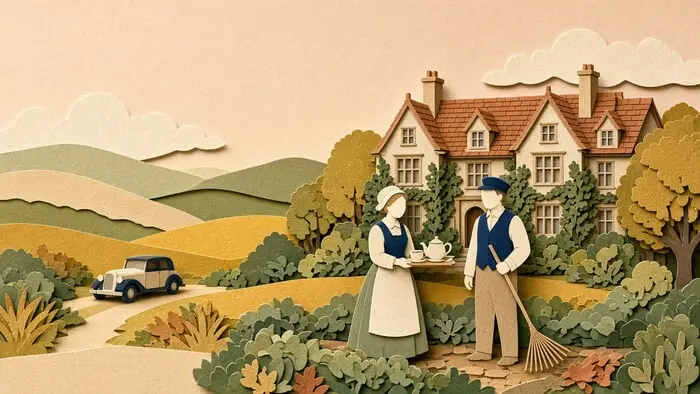
If you and your partner both have practical household skills, a domestic couple job lets you work side by side, live on site and run a private home as a team. Domestic couple jobs in the UK range from London townhouses to country estates of a couple of hundred acres, and the best ones offer a settled home as well as a job.
This guide explains what live-in couple jobs involve, how the work is usually divided, what accommodation and pay look like on current listings, and how to apply together. When you're ready, browse current domestic couple jobs on Jobs in Childcare.
What is a domestic couple job?
A domestic couple job is one position, or two linked positions, filled by two partners who work for the same household. Between you, you keep a private home running: the house itself, the grounds, the cars and, often, the day-to-day needs of the family or principal.
Most couple jobs are live-in. The family provides accommodation on the property or close by, and in return they get two trusted people who know the house inside out and can cover for each other. You'll see these roles advertised as live-in couple jobs, housekeeper and gardener couples, or housekeeper and caretaker couples. The titles differ, but the idea is the same: two complementary skill sets, one household.
Couple jobs suit people who like variety, are happy to live where they work, and get on well enough to share both a home and a job.
How duties are usually split
Most listings divide the work into an inside role and an outside role, and the family wants both done properly.
Inside: housekeeping and cooking
- Cleaning and presenting the house to a high standard
- Laundry, ironing and wardrobe care
- Household shopping, errands and supplies
- Cooking, from simple family meals to more formal dinners, depending on the household
- Getting the house ready for the family and their guests
Outside: driving, gardening, maintenance and butlering
- Gardens and grounds: lawns, hedges, borders and vegetable patches
- General maintenance and small repairs, and knowing when to bring in a contractor
- Driving: errands, station runs and airport runs
- Security, and keeping an eye on the property when the family is away
- In more formal homes, butlering: front-of-house service, serving at table and looking after guests
A live-in housekeeper and gardener couple role in Virginia Water, Surrey, currently on Jobs in Childcare, splits exactly like this. One partner looks after a five-bedroom house, the laundry, the wardrobes and the errands. The other looks after the lawns and vegetable patch, simple maintenance and household driving, including airport runs.
The split is rarely rigid: expect to help each other when the house is busy or the family arrives at short notice. If you'd like to grow into running a larger property one day, read our guide to estate manager vs household manager.
Live-in accommodation: what's usually included
Accommodation is the big draw. Because there are two of you, families rarely offer a single room in the main house. Current listings on the board describe:
- A self-contained one-bedroom flat with its own entrance (the Virginia Water role)
- A cottage near the estate: a part-time couple role on a North Cotswolds estate offers temporary live-in accommodation at first, then a two-bedroom cottage in the neighbouring village
- Staff accommodation on the property itself, which is common on estates
Before you accept, check:
- Whether bills, council tax and broadband are covered, and by whom
- Whether the accommodation is furnished
- Whether you can bring your own pets
- Whether friends and family can come to stay
- Whether a car is provided or you need your own (the Virginia Water family want confident drivers with their own vehicle)
- What happens to your home if the job ends, because losing a live-in job also means moving out
Get all of it in writing before you move.
Pay: one joint package or two salaries?
Couple jobs are usually advertised with one combined figure for the two of you rather than two separate salaries. The two UK couple roles currently listed on Jobs in Childcare show how much that figure can vary:
- Live-in housekeeper and gardener couple, Virginia Water, Surrey: £80,000–£90,000 joint salary, depending on experience, for about 40 hours a week each (ideally Monday to Friday plus Saturday mornings), with a one-bedroom flat.
- Part-time domestic couple, on a North Cotswolds estate: circa £50,000 combined, negotiable, for about 15 hours a week each, with the accommodation described above.
That's two live roles, so treat them as a snapshot, not a market rate. Hours, location, the size of the property, cooking and driving duties, and your experience all move the figure.
Even when the package is joint, ask how it will be paid. It's usually best for each of you to have your own contract and payslip, with your own tax, National Insurance, pension and holiday. Agree how the joint figure is split between you, and check whether it's quoted gross (before tax) or net (take-home). Separate contracts also protect you if one of you is off sick or wants to change role later.
Skills and experience families look for
- Private household experience. Families want couples who understand how a private home works and anticipate what's needed.
- High standards inside. Housekeeping, laundry and fabric care are the core of most inside roles, and cooking adds real value.
- Practical skills outside. Gardening know-how, basic maintenance and the judgement to spot a problem early.
- Driving. Expect families to ask for full UK licences. The North Cotswolds estate role asks for both partners to be confident drivers.
- Discretion. You'll see family life up close. Our guide to working in a VIP or HNW household covers confidentiality in more depth.
- Independence. Many homes are empty for long stretches, so families want people who can manage their own time.
- Teamwork as a couple. Families notice how you work together at interview.
Some couple roles also involve companionship for an older principal. The North Cotswolds estate role, for example, supports an elderly lady with driving, housekeeping and company, and makes clear it isn't a nursing role.
Where the jobs are: London homes, country estates, and travel with the family
London homes
In London, couples often run a townhouse where space is tight, so accommodation is more likely to be a staff flat within the building. Duties lean towards housekeeping, front-of-house service and driving rather than grounds. If you're open to separate roles in the same city, also browse housekeeper jobs in London and household staff jobs in London.
Country estates
Many UK couple roles are outside London, in places such as Surrey, Oxfordshire and the Cotswolds. These suit couples who enjoy rural life and outdoor work: one North Cotswolds estate role on the board covers about 200 acres. Accommodation is more likely to be a cottage or a flat with its own entrance.
Travel with the family
Some families have more than one home, so you might drive to the London house or prepare a second property before the family arrives. Couple roles in the South of France on Jobs in Childcare, for example, involve looking after the property year-round and acting as the on-site contact whether the family is in residence or away. See all current domestic couple jobs in the UK for locations closer to home.
How to apply as a couple
- Write a joint CV. One document, with a short shared profile at the top and then a section for each of you. Lead with private household roles, the size of the properties, how long you stayed and what each of you was responsible for.
- Gather references. Families expect written, checkable references from previous private employers. A reference from a household where you worked together is especially useful, but individual references from separate jobs are fine too.
- Get your DBS check ready. Many families and agencies ask for a DBS certificate, particularly where there are children or an elderly principal in the home. Keep it up to date.
- Have your driving licences to hand. Note any points, and if the role needs your own car, say what you drive.
- Check your right to work. You'll both need the right to work in the UK.
- Apply for roles that fit you both. A listing written for a strong cook and a handyman won't suit a couple who are both housekeepers. Read the duties, then apply through the listing's Apply button.
“Families hire a couple because they want two people they can trust with their home. Show them how you work together, not just what you've each done.” – Jobs in Childcare
Ready to start? Browse current domestic couple jobs on Jobs in Childcare and apply to the roles that suit you both.
FAQ
Can we apply if only one of us has experience?
Often, yes. Many couple roles have a lead role and a supporting one, and a family may accept a partner with less private-household experience if they bring useful practical skills such as gardening, DIY or driving. Be honest on your CV about who does what. Some listings, like the Virginia Water role, ask for an experienced couple, so check the requirements first.
Do couple jobs involve children?
Some do, but many don't. Plenty of couple roles are with households without young children, or where the children already have a nanny. Where a family wants one partner to help with childcare, the listing will say so, and you should expect to be asked for childcare experience and a DBS check.
Are couple jobs full-time?
Most are full-time and live-in, but not all. The North Cotswolds estate role is part-time, at about 15 hours a week each, and can be live-out for a local couple. Always check the hours for each of you, not just the total.
How long do couples usually stay?
Families almost always want a long-term placement, because finding and settling in a new couple takes time. One estate role currently on the board is replacing a couple who have been with the household since 2014. Apply when you're ready to commit for the long run.